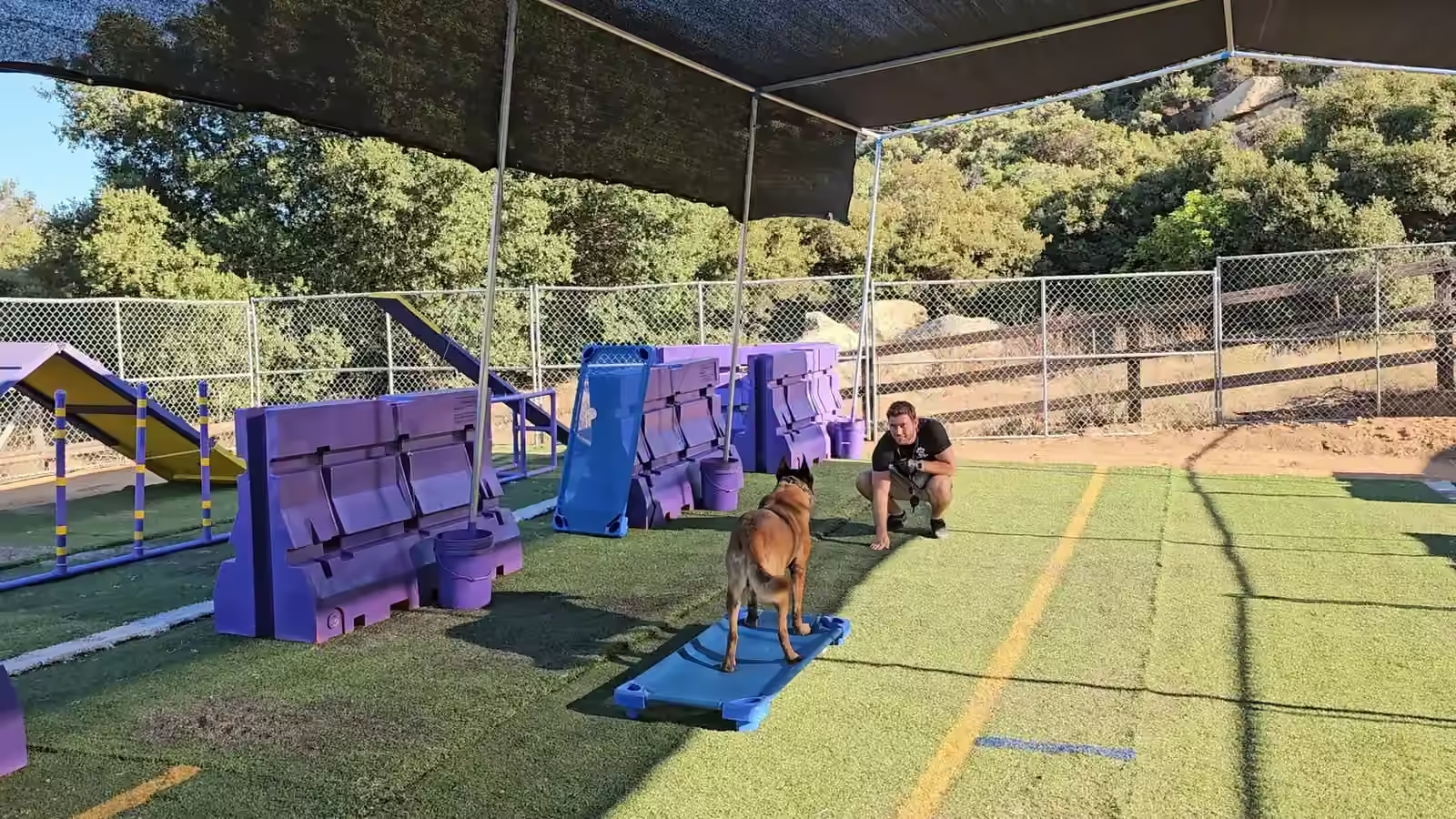
Everything was the same, but now they are a dream on the leash.
"We were worried they would come back without their personalities and fun quirks we like but everything was the same, but now they are a dream on the leash/off leash and in the home!"
Wondering what actually happens in training?
We started EZ Pups after seeing what goes on behind closed doors at some facilities. So here's everything that happens behind ours: what we use, when we use it, who decides, and what we'll never do.
Step one, for every dog
Every dog starts with reward-based training: food, toys, praise and play. It's how we teach every new skill, whether your dog is a wiggly puppy or a giant livestock guardian.
Three words your dog will learn
You'll learn them too, on pickup day.
Nailed it. Here's your reward.It also ends the exercise, so your dog is free to come get it.
Keep doing exactly that.For when your dog is holding a sit and you want them to know they're on the right track.
You're free.Ends the exercise without a reward. Off you go.
Why not rewards only, for every dog?
We get it. Corrections aren't popular, and everyone here was against them at the start too. We still see trainers use them in ways we'd never recommend. Every pet parent should be cautious about them.
So here's why we use them at all. We work with a lot of aggressive dogs, and for many of them, we're the last stop before being put down. Not all of those dogs need more than rewards. Some absolutely do. Rewards teach a dog what to do, and for most dogs that's enough. But a dog who bolts out the front door into traffic, or goes after the neighbor's dog, can want that thing more than any treat. For those dogs, a clear "not that" can be what keeps them safe, and keeps them home.
It's not that different for people. We know right from wrong, and some rules still stick partly because breaking them would cost us something, even on days we're tempted.
A correction never teaches a new skill; rewards do that. It only comes in once a dog clearly knows what's being asked, and only with your OK.
“Not every dog that comes to us needed corrections. But some absolutely did, and they would've been put down without them.”
Davin, lead trainerYour dog will never be put anywhere an aggressive dog could scare them. Dogs with aggression live in their own separate area, away from the other dogs, and dogs never play off-leash together. They mostly practice around our own dogs, and if they ever work near yours, it's from a distance with a fence between them. Our rule around here: if something can go wrong, it will, so we plan for it.
Then learning to be around other dogs is part of their training, mostly with our own dogs, and we build up to it in small steps. We start far enough away that your dog stays calm, and only move closer as they're ready. The whole point is that they never get to the barking-and-lunging stage, because every time they stay calm, the next time gets easier. And we never put either dog in a spot that isn't good for them.
Not on a bad day. Not as a last resort.
Not a swat. Not once.
Calm handlers make calm dogs.
No "alpha rolls." Ever.
No lifting a dog off its feet. No choking a dog.
Plenty of trainers won't tell you what they use. We'd rather you know exactly what happens to your dog before you hand us the leash.
Will they listen to me, too?
Different trainers work with your dog during the stay, on purpose. A dog who only listens to one trainer won't listen to you.
By pickup day, your dog is used to doing their skills for more than one person. That's what makes the handoff work.
A full hour where you run your dog through everything while we coach you on the same words and timing we use.
2, 3 or 5 follow-up sessions at our place, depending on your stay. Use them right away or months later. Plus 5 to 10 minutes of practice a day when your dog first comes home. See the programs »
Will my dog still be my dog?
Everything was the same, but now they are a dream on the leash.
"We were worried they would come back without their personalities and fun quirks we like but everything was the same, but now they are a dream on the leash/off leash and in the home!"
I had tried multiple different trainers and training techniques.
"I have a Husky named Simba and he was extremely aggressive to other dogs and stubborn! I had tried multiple different trainers and training techniques. EZ Pups was my last resort… When we picked him up it was night and day difference."
They treat your dogs like they are their own.
"They genuinely care about the well being of the dogs in their care so much… They put so much effort into giving the dogs a meaningful experience. Everyone we met was kind and accommodating."
Straight answers
Didn't see yours? Text "DOGGO" to (760) 400-6704 and ask away. We'll text you back, no phone call needed.
Sometimes, and only when two things are true: you've said yes after a full walkthrough, and your dog is a good fit. We won't put one on a scared or anxious dog, a young puppy, or a dog that hasn't learned what we're asking yet, even if you ask us to. And if you'd rather we didn't use one, we won't.
Your dog's training can be. Reward-only, with no leash corrections and no e-collar, is always an option: just ask, and there's no minimum. Some dogs get it no matter what, like a scared or anxious dog or a young puppy, because corrections wouldn't help them. For other dogs, and only with your OK, we may also use leash corrections or an e-collar. Either way, you'll know exactly what we use before day one.
Yes. There's no minimum. Tell us on your call and that's how your dog is trained from day one. We'll be straight with you about what to expect for your dog.
Only if it's part of their training and you've said yes. On 6- and 11-week programs, we provide the collar and hand it over at pickup. On 4-week programs, we train on our own collars and show you how it works during your sessions, then send you a link to the exact collar we use so you can get the same one. Either way, an e-collar only goes home when it's right for your dog and your family.
Prong collars, no. We don't put them on dogs: we find them harsher than they need to be, and we get the same results more safely and gently without them. If your dog already wears one, they're still welcome. Slip leads, yes, for two things: moving a dog from spot to spot, and practicing the switch from on-leash to off-leash (your dog sees the familiar leash, then does the same exercise with it off). Never to choke a dog.
Yes. Your weekly update videos show your dog in training, and you can text or call any time. You can also visit once during a 4- or 6-week stay and twice during 11 weeks. It's a visit, not a lesson: training together mid-stay slows your dog's progress.
Lots of our dogs start out reactive. If other dogs set yours off, they still practice around other dogs, mostly our own, in small steps: far enough away that they stay calm, and closer only as they're ready. Whether anything beyond rewards comes in depends on your dog and your OK, same as every dog. Tell us everything on the call, including any bites, and we'll tell you honestly whether we're the right fit and exactly how we'd approach your dog.
Yes. Training should make your dog easier to live with, not less themselves. Same goofball, better manners.
Didn't see yours? Text "DOGGO" to (760) 400-6704 and ask away. We'll text you back, no phone call needed.
Still have questions? Good.
The consultation is free and there's no pressure. On the call we'll:
Rather text than call? Text "DOGGO" to (760) 400-6704 and we'll take it from there.
Open 6am to 11pm, every day
"Do the homework, ask all the questions, and I promise you won't be disappointed!"Alan KaganGoogle review